New Zealand Travel Guide
New Zealand travel offers an extraordinary combination of dramatic landscapes, Māori culture, outdoor adventure and relaxed regional communities. From volcanic landscapes and geothermal areas in the North Island to alpine scenery, fiords and glaciers in the South Island, Aotearoa New Zealand offers remarkably diverse experiences within a relatively compact country. This guide provides an introduction to New Zealand's geography, climate, culture, history and regions to help you understand the country before planning your trip.
Un peu sur la Nouvelle-Zélande
Culture
La culture néo-zélandaise est un mélange dynamique d’héritage autochtone maori et de traditions européennes. Découvrez le pouvoir du haka, les arts traditionnels complexes et la chaleur légendaire de manaakitanga (hospitalité) dans un pays où les coutumes anciennes rencontrent l'aventure moderne.
Climat
La Nouvelle-Zélande offre un climat diversifié toute l’année. Profitez des étés subtropicaux chauds et des hivers doux de l'île du Nord, parfaits pour explorer des paysages époustouflants et des activités de plein air en toute saison.
Géographie
Située dans le sud-ouest du Pacifique, la Nouvelle-Zélande est une terre aux contrastes époustouflants. Des merveilles volcaniques actives et des forêts luxuriantes de l'île du Nord aux majestueuses Alpes du Sud de l'île du Sud, les côtes accidentées et les paysages géothermiques offrent une toile de fond à couper le souffle pour l'aventure.
Histoire
L’histoire de la Nouvelle-Zélande est un riche récit de l’héritage autochtone maori et de l’arrivée des Européens. Depuis les colons maoris du XIIIe siècle jusqu’à la signature du traité de Waitangi en 1840, la nation est devenue une société multiculturelle dynamique qui honore ses fondements culturels uniques.
Gouvernement
Fonctionnant comme une démocratie parlementaire et une monarchie constitutionnelle, la Nouvelle-Zélande est reconnue pour son leadership progressiste et sa stabilité politique. Le gouvernement reste déterminé à protéger l’environnement et à garantir un niveau de vie élevé pour tous.
Économie
La Nouvelle-Zélande possède une économie stable et résiliente alimentée par une agriculture à haute valeur ajoutée, le commerce international et un secteur touristique florissant. Doté d’une réputation mondiale en matière de durabilité, le pays est l’un des principaux exportateurs de produits laitiers, de viande et de laine de première qualité.
About New Zealand
New Zealand is a country of diverse landscapes, distinctive wildlife, rich Māori culture and a strong connection with the natural environment. From the subtropical beaches and volcanic landscapes of the North Island to the mountains, lakes and dramatic coastlines of the South Island, Aotearoa New Zealand offers a remarkable variety of experiences within a relatively compact country.
New Zealand's Two Main Islands
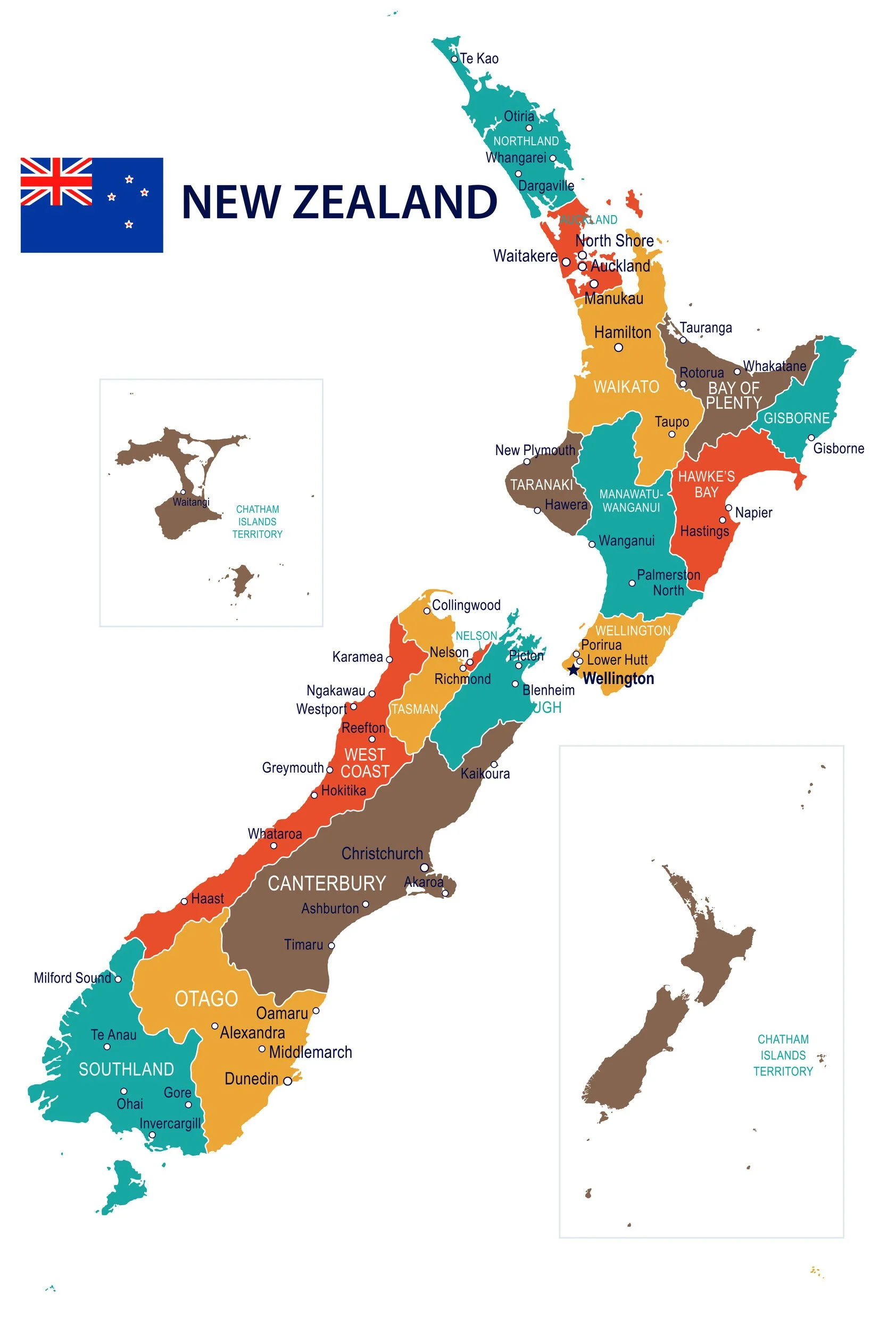
New Zealand is made up of two main islands, the North Island and South Island, along with smaller islands and offshore communities. Each island has its own character and offers different landscapes, attractions and experiences.
The North Island is known for volcanic landscapes, geothermal areas, Māori culture, beaches, forests and major cities including Auckland, Hamilton and Wellington. The South Island is particularly well known for its Southern Alps, alpine lakes, national parks, glaciers and spectacular mountain scenery.
The North Island
The North Island offers a diverse combination of cities, beaches, forests, farmland, volcanic landscapes and cultural experiences. Auckland provides a major international gateway, while destinations such as the Waikato, Rotorua, Taupō, the Coromandel, Northland and Wellington offer very different experiences.
Rotorua is particularly well known for geothermal activity and Māori culture, while the Waikato combines rolling countryside with attractions such as Hobbiton Movie Set, Waitomo and Hamilton Gardens. Further north, Northland and the Bay of Islands offer beaches, coastal scenery, historic sites and access to Cape Reinga.
The South Island
The South Island is known for its dramatic alpine landscapes and some of New Zealand's most spectacular natural scenery. The Southern Alps run through much of the island, creating a landscape of mountains, lakes, valleys and glaciers.
Queenstown is a major destination for adventure activities and mountain scenery, while Christchurch provides an important gateway to the South Island. Other popular destinations include Wanaka, Milford Sound, Abel Tasman National Park, Franz Josef and the West Coast.
Māori Culture in New Zealand
Māori are the tangata whenua, or people of the land, of Aotearoa New Zealand. Māori culture is an important part of New Zealand's identity and can be experienced through language, traditional arts, storytelling, food, music, performance and connections with whenua, or land.
Visitors can learn about Māori history and culture throughout New Zealand. Rotorua is particularly well known for Māori cultural experiences, while Waitangi in Northland is an important place for understanding New Zealand's history and the Treaty of Waitangi.
New Zealand History
New Zealand's history includes the settlement of Aotearoa by Polynesian ancestors of Māori, followed centuries later by European exploration and settlement. The country's history has shaped its modern identity, communities and relationship between Māori and the Crown.
The Treaty of Waitangi, signed in 1840, is one of the most important documents in New Zealand history. Museums, historic sites and cultural experiences around the country provide opportunities to learn more about this history and its continuing significance.
Geography and Landscapes
New Zealand's geography is remarkably varied for a relatively small country. Visitors can experience volcanic plateaus, geothermal areas, mountains, forests, farmland, beaches, lakes, rivers, caves and rugged coastlines.
The North Island has several active and volcanic landscapes, particularly around the central North Island. The South Island is dominated by the Southern Alps and contains some of the country's most dramatic alpine and glacial scenery.
Climate in New Zealand
New Zealand has a temperate climate, although conditions vary considerably between regions. The North Island generally has a warmer climate, while the South Island can experience much colder conditions, particularly in alpine areas.
New Zealand's weather can change quickly, especially in mountainous and coastal areas. Travellers should consider both the season and the regions they plan to visit when preparing for their trip.
New Zealand in Summer
Summer generally brings longer daylight hours and is a popular time for sightseeing, hiking, beaches, boating and other outdoor activities. December, January and February are the traditional summer months.
Summer is also one of the busiest travel periods, particularly around popular destinations and during the Christmas and New Year holiday period.
New Zealand in Winter
Winter brings cooler temperatures and snow to many alpine areas, creating opportunities for skiing, snowboarding and winter scenery. The North Island's central volcanic plateau and the South Island's mountain regions are particularly popular for winter activities.
Winter can also be an excellent time to explore museums, cultural attractions, geothermal areas, food experiences and other activities that do not depend on warm weather.
Wildlife in New Zealand
New Zealand is home to many distinctive native species, including the kiwi, kea, tūī, kererū and tuatara. Because many native species evolved in isolation, the country's wildlife is unlike that found in many other parts of the world.
Conservation areas, wildlife sanctuaries and marine reserves provide opportunities to see native species while learning about the work being done to protect them. Travellers can experience native wildlife in places such as Zealandia in Wellington, the National Kiwi Hatchery near Rotorua and protected coastal environments around New Zealand.
New Zealand's Outdoor Experiences
Outdoor activities are an important part of travelling in New Zealand. Depending on the destination and season, visitors can enjoy hiking, kayaking, surfing, skiing, fishing, cycling, boating, wildlife experiences and many other adventures.
New Zealand's Great Walks and national parks provide some of the country's best opportunities for exploring on foot, while its extensive coastline and waterways create opportunities to experience the landscape from the water.
Food and Wine in New Zealand
New Zealand's food scene reflects its agricultural heritage, coastal environment and multicultural communities. Local produce, seafood, lamb, beef, dairy products, fruit and wine are important parts of the country's food culture.
Wine regions throughout New Zealand offer opportunities to visit vineyards, enjoy local food and experience the landscapes where many of the country's wines are produced. Regional food experiences can also be a valuable part of a wider New Zealand itinerary.
New Zealand Cities
New Zealand's cities provide useful starting points for exploring the country's different regions. Auckland is the largest city and an important international gateway, while Wellington is the national capital and a major cultural centre.
Hamilton provides access to the Waikato and is conveniently located for destinations such as Hobbiton, Waitomo, Rotorua and the Coromandel. Christchurch is an important South Island gateway, while Queenstown is a major base for exploring the surrounding mountains, lakes and adventure attractions.
North Island Regions to Explore
The North Island contains several distinct travel regions, each offering different experiences. Northland is known for beaches, kauri forests, Māori history and the Bay of Islands. Auckland combines city attractions with beaches, islands and volcanic landscapes.
The Waikato offers countryside, caves, gardens and famous attractions such as Hobbiton. The Coromandel is known for beaches and coastal scenery, while Rotorua is a centre for geothermal experiences and Māori culture. Taupō offers lake and volcanic landscapes, and Wellington combines culture, food, museums and harbour scenery.
South Island Regions to Explore
The South Island offers an impressive range of landscapes, from the alpine scenery around Queenstown and Wānaka to the rugged West Coast, Canterbury plains and coastal areas of Nelson and Marlborough.
Fiordland National Park and Milford Sound provide some of the country's most dramatic scenery, while Abel Tasman National Park is known for its beaches, coastal walking tracks and clear waters.
How Long Do You Need in New Zealand?
How long you need in New Zealand depends on how many regions you want to visit. A shorter trip can focus on one island or a small number of destinations, while a longer holiday allows more time to travel between regions and experience different landscapes.
It is usually better to allow enough time to enjoy each destination rather than trying to cover too much ground. New Zealand's winding roads and changing landscapes mean that journeys can take longer than they appear on a map.
Planning a New Zealand Holiday
Planning a New Zealand holiday starts with deciding which regions and experiences matter most to you. Your itinerary might focus on nature, adventure, Māori culture, food and wine, wildlife, relaxation or a combination of different interests.
Once you have chosen your main destinations, you can work out how much time to spend in each region and how best to connect them. Building some flexibility into your itinerary can also be useful because weather and travel conditions can change.
Travelling Around New Zealand
New Zealand can be explored by car, campervan, bus, domestic flight or guided tour. Driving provides flexibility and makes it easier to reach smaller towns, scenic areas and attractions away from major transport routes.
Visitors who prefer not to drive can use public transport, domestic flights or guided experiences. Private touring can provide another option for travellers who want a local driver-guide and a customised itinerary without managing the driving themselves.
New Zealand as a Travel Destination
New Zealand combines dramatic natural scenery with a relatively easy-to-navigate travel environment, distinctive Māori culture and a wide range of outdoor and cultural experiences. The country's two main islands provide enough variety for very different types of holidays.
Whether your ideal trip involves geothermal landscapes in Rotorua, beaches in the Coromandel, mountains in the South Island, Māori culture, wildlife or simply exploring the countryside, New Zealand offers plenty of opportunities to create a memorable journey.
Exploring New Zealand with Great North Tours
Great North Tours specialises in private customised tours throughout New Zealand's North Island. Based in Hamilton in the Waikato, we can help connect destinations, activities, accommodation and transport into a practical itinerary built around your group's interests.
Our private tours can include cities, natural attractions, wildlife experiences, Māori cultural activities, outdoor adventures, food and wine experiences and many other places across the North Island. We can also assist with wider New Zealand trip planning when your journey includes the South Island.
New Zealand: FAQs
What is New Zealand known for?
New Zealand is known for its spectacular natural landscapes, Māori culture, outdoor adventures, unique wildlife and welcoming communities. The country offers everything from beaches, forests and geothermal areas to mountains, lakes, national parks and vibrant cities.
Is New Zealand worth visiting?
New Zealand is an excellent destination for travellers interested in nature, outdoor experiences, culture, food and scenic landscapes. Its relatively compact size also makes it possible to experience very different environments and regions during one trip.
What are the best places to visit in New Zealand?
Popular places to visit include Auckland, the Bay of Islands, Waikato, Rotorua, Taupō, Wellington, the Coromandel Peninsula, Queenstown, Fiordland, the West Coast and Aoraki Mount Cook. The best destinations depend on your interests, from Māori culture and geothermal landscapes to beaches, hiking and alpine scenery.
What is the North Island known for?
The North Island is known for Māori culture, geothermal landscapes, volcanic scenery, beaches, islands, forests and major cities such as Auckland and Wellington. Regions including Waikato, Rotorua, Taupō, Northland and the Coromandel offer a wide variety of experiences.
What is the South Island known for?
The South Island is known for dramatic mountains, alpine landscapes, glaciers, lakes, fiords, vineyards and spectacular national parks. Popular destinations include Queenstown, Wānaka, Christchurch, Aoraki Mount Cook, Fiordland and the West Coast.
What is the best time to visit New Zealand?
New Zealand can be visited throughout the year. Summer is popular for beaches and outdoor activities, autumn offers colourful scenery and generally fewer visitors, winter is ideal for snow and skiing, and spring brings gardens, blossoms and fresh green landscapes.
Quel temps fait-il en Nouvelle-Zélande ?
New Zealand has a generally mild maritime climate, but conditions vary considerably between regions. The far north can experience warmer subtropical conditions, while alpine areas can be very cold in winter. Weather can also change quickly, so visitors should be prepared for different conditions.
What is Māori culture like in New Zealand?
Māori culture is an important part of life in Aotearoa New Zealand. Visitors can experience Māori history, stories, language, carving, weaving, traditional food, performances and cultural sites throughout the country, particularly in regions such as Rotorua and Northland.
What wildlife can you see in New Zealand?
New Zealand is home to many distinctive native species, including kiwi, tūī, kererū, kea, tuatara and several species of native penguins and seabirds. Wildlife experiences range from conservation sanctuaries and forests to coastal and marine environments.
What are the main regions of New Zealand?
New Zealand is divided into regions across the North and South Islands, each with its own landscapes, attractions and character. Major travel regions include Northland, Auckland, Waikato, Bay of Plenty, Rotorua, Taupō, Wellington, Canterbury, Otago, Fiordland, the West Coast and Nelson Tasman.
What makes New Zealand's landscapes unique?
New Zealand has an unusually diverse combination of landscapes within a relatively compact country. Travellers can experience volcanic and geothermal areas, beaches, native forests, rolling farmland, lakes, mountains, glaciers and fiords across the North and South Islands.
Should I visit the North Island or South Island?
Both islands offer very different experiences. The North Island is particularly strong for Māori culture, geothermal attractions, beaches, subtropical landscapes and major cities, while the South Island is famous for mountains, alpine scenery, glaciers, lakes and fiords. Many longer New Zealand holidays combine both.
Régions de Nouvelle-Zélande